Most drivers brace for a dead battery on the coldest morning of the year. The battery usually obliges in a different season. Summer heat does the slow damage, cooking the battery month after month in a hot engine bay, and the failure simply shows up later, sometimes on that first cold snap, sometimes in an August parking lot in Kings Mountain with groceries in the trunk. Cold reveals weak batteries. Heat creates them.
Understanding that sequence changes how you treat the battery. Instead of waiting for the no-start, you test on a schedule, watch for the early signs, and replace a fading battery on your terms rather than the battery's.
What heat actually does inside the battery
A car battery is a chemical device, and heat speeds chemistry up. In a hot engine bay, the fluid inside a conventional battery evaporates faster, the internal plates corrode and shed material faster, and the battery's self-discharge rate climbs, so it sits partially discharged more of the time, which itself shortens life. Piedmont summers stack the deck: weeks of 90-degree days, an engine bay that stays hot long after parking, and short trips that never fully recharge what the starter and the air conditioning took out.
Cold weather gets the blame because it asks the most of the battery at the moment it can give the least. Thick oil makes the engine harder to turn, and a cold battery delivers less cranking power. A battery weakened by two summers may still start the car all fall, then fail the first genuinely cold morning. The autopsy, if anyone did one, would point back to July.
The warning signs, in the order they usually appear
Batteries rarely die without saying anything first. The starter turns the engine more slowly than it used to, a lazy crank that is easiest to notice on the first start of the day. Headlights dim noticeably at idle and brighten as you rev. Electrical oddities appear: windows that move slowly, a radio that resets, warning lights that flicker during cranking. On the battery itself, a case that looks swollen or bulged, heavy corrosion around the terminals, or a rotten-egg smell all point to a battery at the end. Any two of these together justify a test that week, not next month.

Testing beats guessing
A proper battery test takes minutes and measures more than voltage. A load or conductance test estimates the battery's remaining capacity, its ability to deliver starting current, which is the number that decides whether you get stranded. The charging system gets checked in the same visit, because a weak alternator can starve a good battery, and replacing the battery without catching that means repeating the failure. This is routine preventive maintenance at a shop like Buchanan Auto Repair, and it is the kind of test worth asking for every fall if your battery is past its third birthday.
You can do a rough version yourself. A simple multimeter across the terminals of a rested battery tells you state of charge, and a reading well under 12.4 volts on a battery that has been driven regularly says either the battery or the charging system needs attention. Keep the terminals clean and tight in any case: corrosion adds resistance that mimics a dying battery.
What waiting costs
The neglect path is predictable. A weak battery strains the starter and alternator, so a battery problem left alone can turn into a starting and charging problem. The failure itself picks its moment: the school run, the airport trip, the Sunday evening when nothing is open. A jump start gets you moving but does not restore a battery that heat has worn out, and repeated deep discharges finish it faster. Replacing a tested-weak battery during a planned visit is the cheap version of this story in every way except the line item, and it is the only version where you choose the day.
Common questions
How long should a car battery last in North Carolina?
Typically three to five years, with the Piedmont's hot summers pushing toward the shorter end. A battery past four years deserves a capacity test before summer and again before winter.
My battery died without warning. Is that possible?
It feels sudden, but a load test usually shows the decline was underway. A cell can also fail abruptly after heat damage, which is why age plus a slow crank should be treated as the warning.
Does a jump start fix the problem?
It fixes the morning, not the battery. If the battery is worn out or the alternator is not charging, the car will strand you again, so a jump should always be followed by a test.
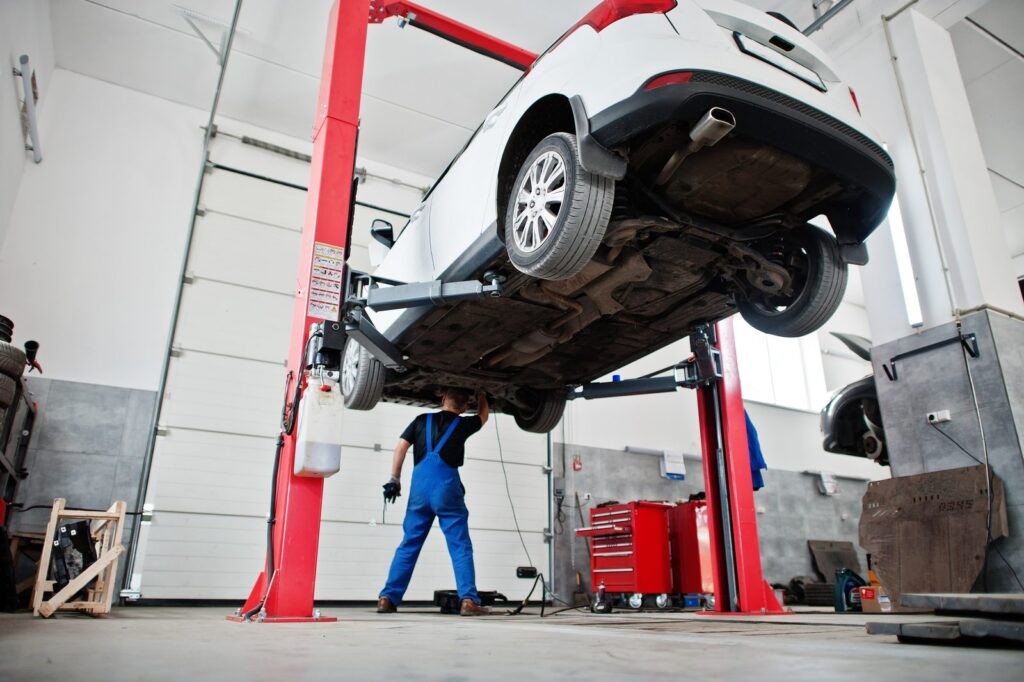
Photos in this guide are representative stock images.
← All guides from Buchanan Auto Repair← Back to Buchanan Auto Repair